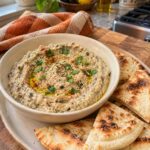

Baba Ganoush with Pita
Baba ganoush is a Levantine eggplant dip that’s creamy without being perfectly smooth. Charred globe eggplant gives it a smoky flavor, tahini brings a nutty richness, and fresh lemon juice brightens each bite. Finely grated garlic gives the dip a little bite without leaving big pieces, so the texture you notice is the soft eggplant.
On an appetizer table, this is the kind of dip you can serve in a shallow bowl with the pita right beside it. The warm wedges are easy to pick up and sturdy enough to scoop, and a swirl of olive oil gives guests a chance to catch some of the topping with each dip.
Look for tender flesh and blistered skins
The eggplant has two different cues for doneness, and they tell you different things. The roasted halves should look collapsed, and a knife should slide easily into the flesh. That tenderness matters because you’ll be mashing the eggplant with a fork. The broiler is there to blister and char the skins, not to finish cooking flesh that’s still firm.
Watch closely under the broiler. You’re looking for blistered skins with blackened spots, not an evenly black surface. The char gives the dip its smoky character even though you scoop out the flesh and discard the skins.
Drain the eggplant without squeezing it
Even tender, collapsed eggplant can release enough liquid to loosen the dip. A fine-mesh strainer lets that liquid collect in the bowl underneath rather than in your baba ganoush. Let the flesh drain on its own without pressing it. The difference shows up when you scoop: the dip should hold on to the pita rather than run off the wedge.
Use a fork for a creamy dip with texture
Well-stirred tahini makes it easier to mix the lemon juice, finely grated garlic, and fine sea salt into a cohesive base. The tahini gives the dip body while the lemon keeps that richness from dominating. Once the eggplant goes in, a fork lets you break up larger pieces while leaving the smaller, tender bits that make this dip slightly chunky.

The olive oil you stir into the dip and the drizzle on top do different jobs. The first blends into the mash; the second settles into the shallow swirl you make with the back of a spoon. Chopped parsley adds freshness, and sesame seeds echo the nuttiness of the tahini. The smoked paprika on top complements the charred eggplant.
Keep the pita warm without making it brittle
A dry cast-iron skillet gives the pita browned spots while leaving it flexible enough to scoop. You don’t need browning from edge to edge. Stack the toasted rounds in a clean kitchen towel so they stay warm as you finish the rest, then cut them into wedges for serving.
Frequently Asked Questions
What if my eggplant is browned but still firm?
Go by how the flesh feels, not just how the outside looks. The halves should collapse and offer little resistance when pierced with a knife. If the flesh is still firm, it needs more roasting before you switch to the broiler.
Should I stir the tahini if oil has separated in the jar?
Yes. Stir the tahini until the oil and paste are blended before you use it. Scooping from an unstirred jar can give you mostly oil from the top or a stiff paste from the bottom, neither of which mixes as evenly into the dip.
When should I check the dip for salt?
Taste the dip after you’ve mashed in the eggplant and stirred in the olive oil. The tahini mixture on its own won’t taste the same as the finished dip. Check the seasoning before you spoon it into the serving bowl and add the toppings.
Baba Ganoush with Pita
Charred eggplant, tahini, lemon, and garlic make a creamy dip with a slightly chunky texture. Serve it with warm, blistered pita wedges and a swirl of olive oil.
8
servings15
minutes52
minutes190
kcal1
hour14
minutesIngredients
- Baba Ganoush
2 medium globe eggplants (about 2 lb total)
3 tbsp extra-virgin olive oil, divided
3 tbsp tahini, well stirred
2 tbsp fresh lemon juice
1 garlic clove, finely grated
1/2 tsp fine sea salt, plus more to taste
1 tbsp chopped fresh flat-leaf parsley
1 tsp sesame seeds
1/4 tsp smoked paprika
- Pita
4 pita rounds (about 2 oz each)
Directions
- Roast the Eggplant
- Preheat the oven to 450°F with a rack in the middle and another about 6 inches below the broiler. Line a rimmed baking sheet with foil. Halve the eggplants lengthwise, brush the cut sides with 1 tbsp of the olive oil, and place them cut side down on the baking sheet.
- Roast on the middle rack for 40 minutes, until the halves have collapsed and a knife slides easily into the flesh. Switch the broiler to high and move the baking sheet to the upper rack. Broil for 4 minutes, watching closely, until the skins are blistered and blackened in spots.
- Drain the Eggplant
- Let the eggplant cool on the baking sheet for 5 minutes. Scoop the flesh into a fine-mesh strainer set over a bowl and discard the skins. Let the flesh drain for 10 minutes without pressing it.
- Warm the Pita
- While the eggplant drains, heat a dry 10-inch cast-iron skillet over medium-high heat. Toast the pitas one at a time for 1 minute per side, until warm and browned in spots. Stack them in a clean kitchen towel to keep them warm, then cut each into 6 wedges.
- Mix and Serve
- In a mixing bowl, stir together the tahini, lemon juice, garlic, and salt. Add the drained eggplant and mash with a fork, leaving some small pieces for texture. Stir in 1 tbsp olive oil and taste for salt. Spoon into a shallow serving bowl and make a swirl with the back of a spoon. Drizzle with the remaining 1 tbsp olive oil and sprinkle with the parsley, sesame seeds, and smoked paprika. Serve with the warm pita wedges.
Notes
- Let the eggplant drain before mixing. Removing the liquid it releases keeps the dip thick enough to scoop with pita.
- If you’re making the dip ahead, refrigerate it covered for up to 3 days. Add the olive oil drizzle and toppings just before serving.