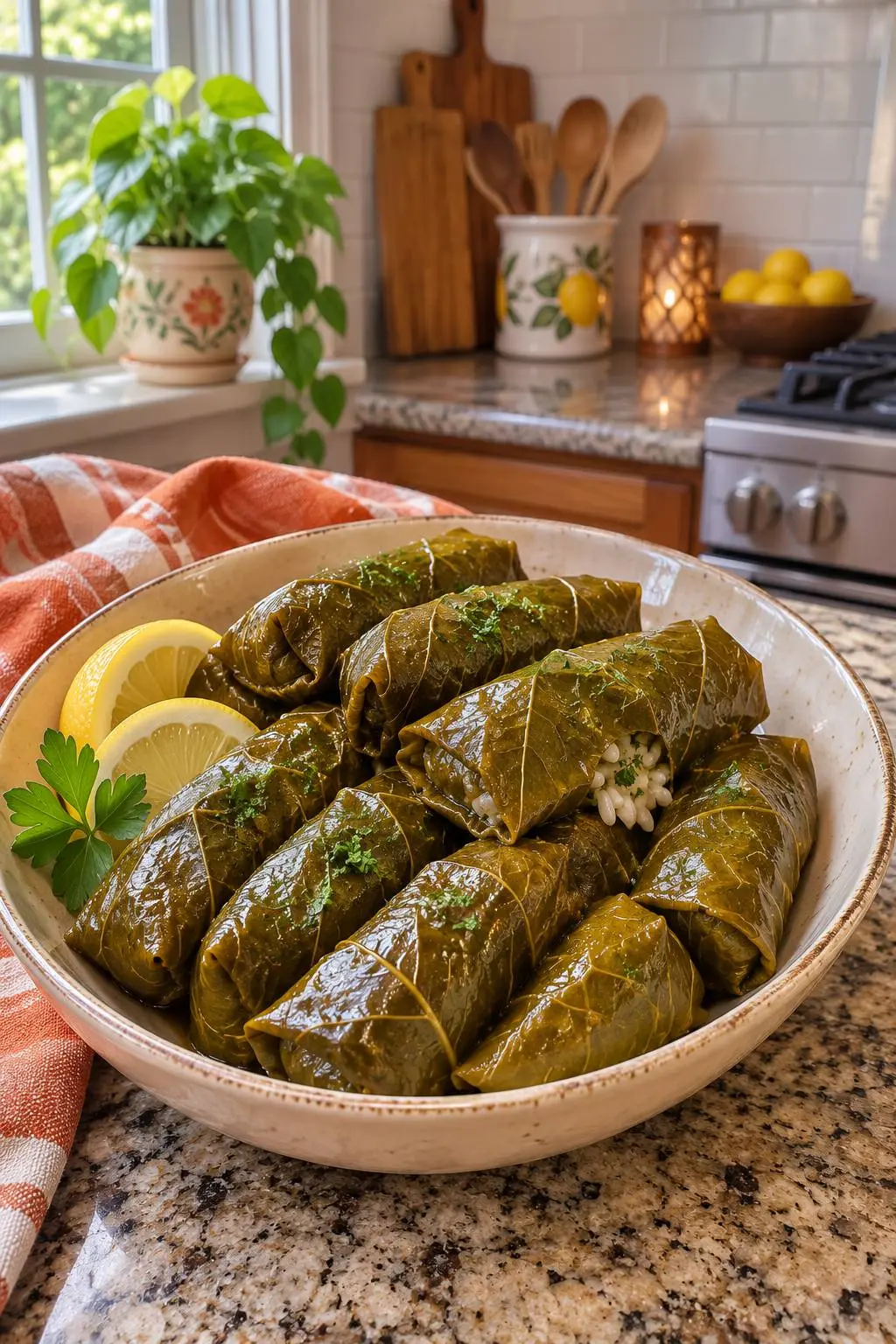
Stuffed Grape Leaves
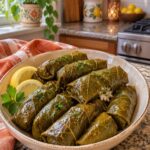
Stuffed grape leaves are a Mediterranean appetizer that feels right at home on a party platter. The tender leaves give way to a soft rice filling flecked with flat-leaf parsley and fresh dill. Lemon juice adds brightness as the rolls simmer, and a finishing drizzle of extra-virgin olive oil gives them a glossy finish. You can serve them warm or chilled, with lemon wedges alongside for anyone who wants an extra squeeze.
Save the torn leaves for the pot
Jarred grape leaves are packed in brine, so a cool rinse helps wash away the brine before you fill them. Separate them gently rather than tugging at a folded edge, where a leaf can tear. Snip off any tough stems so they don’t get in the way when you fold the leaf. Look for intact, medium-size leaves with enough width to fold neatly over the filling.
A torn leaf may not hold the rice, but it still has a job: use it to line the bottom of the pot. That lining keeps the rolls from sitting directly against the base and lets you save the intact leaves for wrapping.
Keep the onion soft and the rolls snug
The yellow onion should soften in the olive oil without browning, so its flavor supports the parsley and dill rather than competing with them. The filling starts with rinsed, drained long-grain white rice, not cooked rice. Its brief turn in the skillet isn’t meant to cook it through; that happens inside the leaves as the rolls simmer.
With the veined side facing up, the smoother side of the leaf ends up on the outside. The trick is to roll snugly enough to keep the folded sides in place without squeezing the filling. A smaller leaf needs less rice, even if it looks like you could tuck in more. Leave a little give so the grains can expand without splitting the wrapper.
Keep the rolls steady at a gentle simmer
A wide, heavy pot gives you room to nestle the rolls close together. Set them seam side down and weigh them with an upside-down heatproof plate so they don’t shift as they cook. The liquid should reach the tops of the rolls, and a gentle simmer is what you want rather than a hard boil.
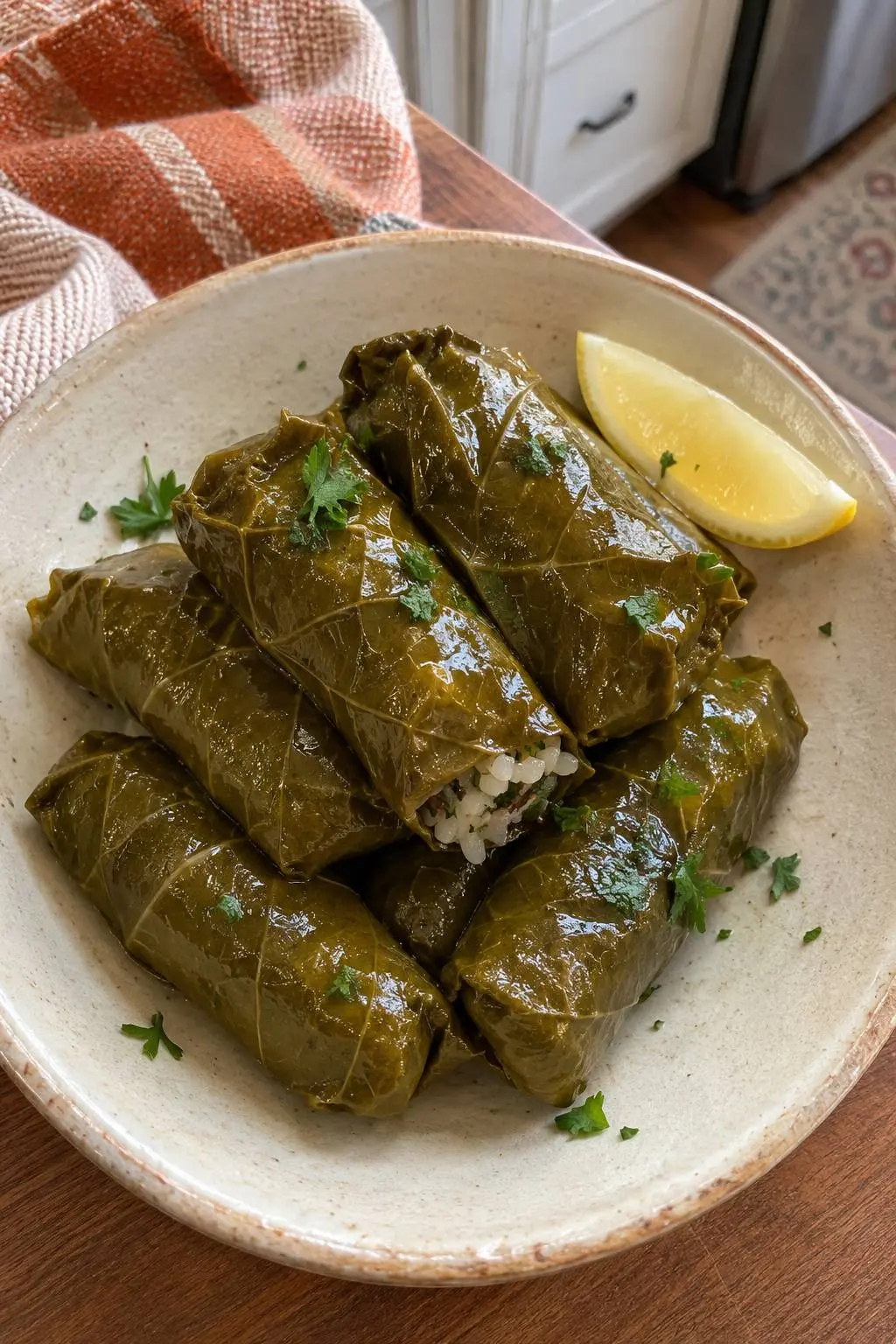
Check a roll from the top layer for doneness. You’re looking for a tender leaf and rice that’s cooked all the way through, without a firm center. Let the rolls rest covered before lifting them out with a slotted spoon. Finish with the reserved parsley and olive oil so the fresh herbs and glossy drizzle are right on top.
Frequently Asked Questions
How can you tell if you’ve overfilled a grape leaf?
If you have to stretch the leaf to bring the sides together, or rice pushes out as you roll, take some filling out. The sides should fold in comfortably, with enough slack for the rice to expand during cooking.
Why put a plate directly on the rolls?
The heatproof plate acts as a weight, keeping the rolls in place as the liquid simmers around them. The pot lid covers the pot, but it doesn’t touch the rolls, so it can’t do the same job.
Do stuffed grape leaves need to be served warm?
No. They’re just as suited to a chilled appetizer platter as they are to a warm one. Either way, serve the rolls with the finishing olive oil and parsley, plus lemon wedges so guests can add more brightness to taste.
Stuffed Grape Leaves
Tender grape leaves are wrapped around a parsley, dill, and rice filling and simmered with lemon and olive oil. Serve them warm or chilled with lemon wedges.
8
servings35
minutes1
hour160
kcal1
hour55
minutesIngredients
1 (16 oz) jar grape leaves in brine
1 cup uncooked long-grain white rice, rinsed and drained
4 tbsp extra-virgin olive oil, divided
3/4 cup finely chopped yellow onion
1/3 cup finely chopped flat-leaf parsley, divided
2 tbsp finely chopped fresh dill
1/4 tsp kosher salt
1/4 tsp ground black pepper
2 to 4 cups water, as needed
1/4 cup fresh lemon juice
1 lemon, cut into wedges
Directions
- Drain the grape leaves, gently separate them, and rinse under cool running water. Snip off any tough stems. Set aside about 32 intact medium leaves for rolling and reserve the torn leaves to line the pot.
- Heat 2 tbsp of the olive oil in a skillet over medium heat. Add the onion and cook for 5 minutes, stirring occasionally, until softened but not browned. Stir in the rice and cook for 1 minute. Remove from the heat and stir in 1/4 cup of the parsley, the dill, salt, and pepper.
- Line the bottom of an 8-inch-wide heavy pot with the torn grape leaves. Lay an intact leaf flat, veined side up and stem end toward you. Spoon about 1 tbsp of the rice mixture just above the stem end, using a little less for small leaves. Fold the bottom of the leaf over the filling, fold in the sides, and roll it up snugly without squeezing. Place seam side down in the pot. Repeat, packing the rolls close together in up to two layers.
- Pour 2 cups of the water, the lemon juice, and 1 tbsp of the olive oil around the rolls. Set a small heatproof plate upside down directly on top to hold them in place. Add just enough of the remaining water to bring the liquid level to the tops of the rolls. Bring to a simmer over medium heat, 5 to 10 minutes. Cover the pot, reduce the heat to low, and simmer gently for 45 minutes, until a roll from the top layer has a tender leaf and fully cooked rice.
- Remove from the heat and let the rolls rest, covered, for 20 minutes. Carefully lift out the plate and transfer the rolls to a shallow serving bowl with a slotted spoon. Drizzle with the remaining 1 tbsp olive oil, sprinkle with the remaining parsley, and serve with lemon wedges.
Notes
- Leave a little give in each roll so the rice has room to expand without splitting the leaf.
- For a make-ahead appetizer, refrigerate the cooked rolls in a covered container for up to 3 days. Add the final drizzle of olive oil, parsley, and lemon wedges just before serving.