Kung Pao Chicken with Roasted Peanuts
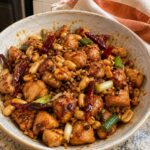
This Kung Pao Chicken with Roasted Peanuts brings the bold, familiar flavors of a Chinese-American favorite to the appetizer table. Bite-size chicken is coated in a savory, lightly sweet sauce, with roasted peanuts and scallions adding contrast in every bite.
The whole dried chiles and crushed Sichuan peppercorns give the dish its distinctive warmth. Serve it warm with toothpicks so guests can help themselves, moving the chiles aside if they prefer not to eat them.
Build a sauce that clings to the chicken
The sauce balances chicken broth and low-sodium soy sauce with apple cider vinegar and honey. The vinegar brings a tangy edge, while honey softens the saltiness without turning the sauce into a sweet glaze. Toasted sesame oil rounds out the mixture with a toasty note.
Cornstarch plays two roles: it coats the chicken before cooking and helps thicken the sauce in the skillet. Whisk the sauce again just before pouring it in, since the cornstarch can settle while it waits. A smooth, well-mixed sauce thickens evenly around the chicken instead of leaving a starchy layer at the bottom.
Give the chicken room to brown
Boneless, skinless chicken thighs stay tender and are easy to cut into bite-size pieces. Cooking them in batches helps keep the skillet from crowding, so the pieces can brown rather than steam. Turn them only as needed, and transfer each batch before it is fully cooked; it will finish simmering in the sauce.
The chicken is lightly coated with soy sauce and cornstarch before it hits the pan. That coating helps the sauce adhere later, but excess moisture or crowding can make browning harder. Keep the first batch on a plate while the remaining chicken cooks, then return all the chicken and its juices to the skillet for the finish.

Layer in the chile, ginger, and scallions
Dried red chiles and lightly crushed Sichuan peppercorns go into the hot skillet before the garlic, ginger, and scallion whites. This brief, attentive stirring releases their aroma; keep everything moving so the garlic does not scorch. The scallion whites soften with the aromatics, while the greens are saved for a fresher finish.
Whole dried chiles flavor the sauce as it simmers. They are meant to be easy to spot, so guests can push them aside rather than eat them. Stirring the scallion greens and toasted peanuts in near the end preserves their contrast against the tender chicken and glossy sauce.
Toast the peanuts for a crisp finish
Unsalted dry-roasted peanuts add a nutty, crunchy counterpoint to the tender chicken. Toast them in the skillet first, stirring often, and transfer them to a plate before cooking the chicken. This gives them their own attention and leaves room for the batches of chicken.
Add the peanuts back with the scallion greens near the end, so they remain distinct instead of sitting in the sauce throughout cooking. For an appetizer, arrange the chicken and its sauce where guests can reach the pieces with toothpicks. The different textures make each bite feel complete.
Frequently Asked Questions
Are the dried chiles meant to be eaten?
No. The whole dried chiles season the sauce as the chicken simmers, but diners can move them aside. Their presence adds chile flavor to the dish without requiring anyone to bite into one.
Why cook the chicken in batches?
Batches give the chicken more room in the skillet, making browning easier and reducing the chance that crowded pieces steam. The chicken is still slightly underdone when transferred, then finishes cooking when it returns to the simmering sauce.
When do the peanuts and scallion greens go in?
Stir both in during the final minute of cooking. That timing warms the peanuts and scallion greens while helping them keep their texture and fresh contrast with the tender chicken and thickened sauce.
Kung Pao Chicken with Roasted Peanuts
Bite-size chicken, roasted peanuts, dried chiles, and scallions are tossed in a savory, lightly sweet sauce. Serve it warm as a party appetizer with toothpicks.
6
servings15
minutes13
minutes265
kcal28
minutesIngredients
- Chicken
1 lb boneless, skinless chicken thighs, cut into 1-inch pieces
1 tbsp low-sodium soy sauce
1 tbsp cornstarch
- Sauce
1/4 cup chicken broth
2 tbsp low-sodium soy sauce
1 tbsp apple cider vinegar
1 tbsp honey
1 tsp cornstarch
1 tsp toasted sesame oil
- Stir-fry and finish
2 tbsp neutral oil
1/2 cup unsalted dry-roasted peanuts
8 dried red chiles
2 garlic cloves, minced
1 tsp minced fresh ginger
1/2 tsp Sichuan peppercorns, lightly crushed
3 scallions, cut into 1-inch pieces, white and green parts separated
Directions
- Prepare
- Toss the chicken with 1 tablespoon soy sauce and 1 tablespoon cornstarch. In a small bowl, whisk together the broth, 2 tablespoons soy sauce, apple cider vinegar, honey, 1 teaspoon cornstarch, and sesame oil.
- Cook
- Heat a large skillet over medium heat. Add the peanuts and toast, stirring often, for 2 minutes. Transfer them to a plate.
- Raise the heat to medium-high and add 1 tablespoon of the neutral oil. Cook half the chicken, turning the pieces once or twice, for 3 minutes. Transfer to a plate; the pieces will still be slightly underdone. Add the remaining oil and cook the rest of the chicken for 3 minutes, then transfer it to the plate.
- Add the dried chiles and crushed Sichuan peppercorns to the skillet and stir for 30 seconds. Add the garlic, ginger, and scallion whites; stir for 30 seconds.
- Finish
- Whisk the sauce again, then pour it into the skillet and return the chicken with any juices. Simmer for 4 minutes, stirring, until the sauce thickens and the chicken reaches 165°F. Stir in the scallion greens and toasted peanuts during the last minute.
Notes
- The whole dried chiles flavor the sauce; diners can move them aside rather than eating them.