
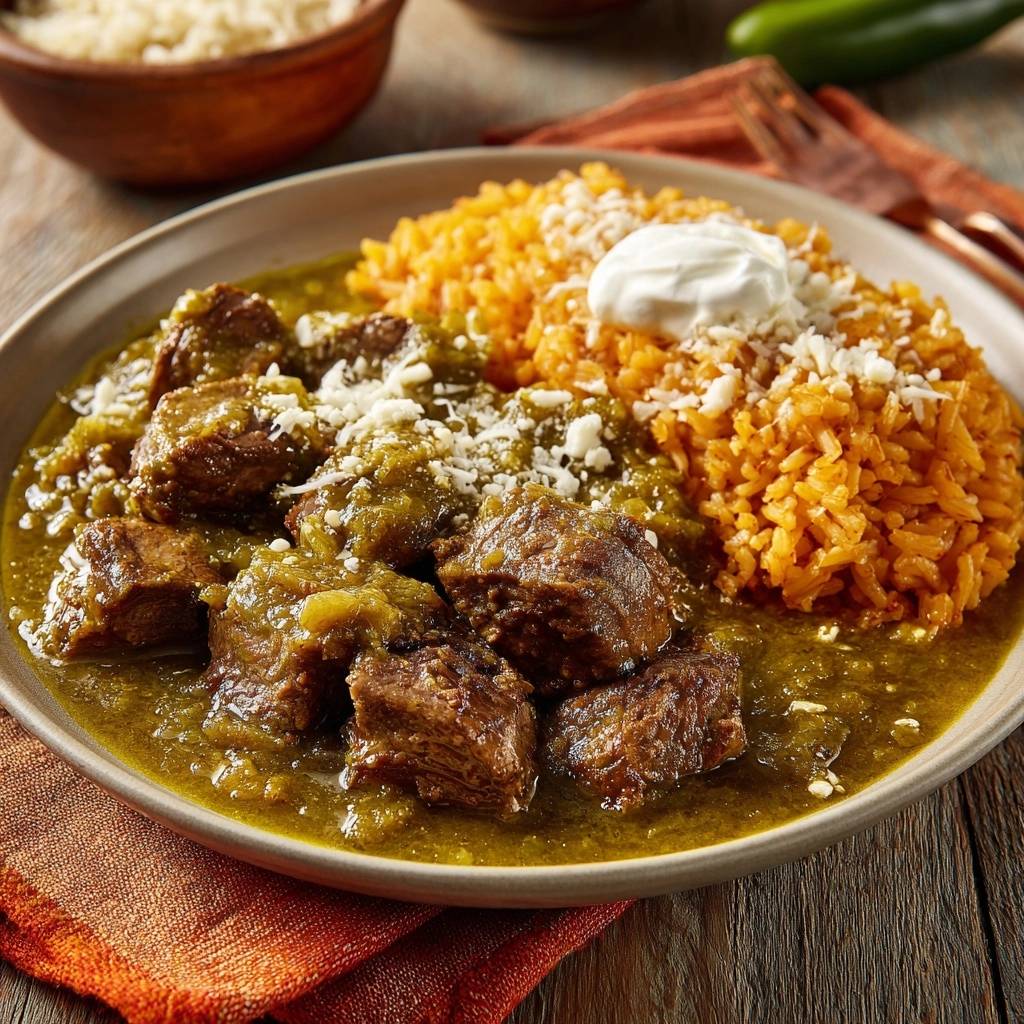
Beef Chile Verde with Mexican Rice
Ever bitten into beef chile verde that’s more chew than comfort? Most recipes leave chuck roast stringy because they skip the sear and rely on endless braising. This version fixes that fast. You’ll have fall-apart tender beef in under two hours, paired with fluffy Mexican rice for a complete meal that serves 6.
Here’s why it works so well. The high-heat sear creates a crust that locks in juices, while the tomatillo sauce’s acidity tenderizes the meat naturally. No more guesswork or tough bites. Plus, fresh poblanos and cilantro deliver authentic Mexican punch without canned shortcuts.
The real secret lies in 1.5-inch beef cubes. They maximize surface area for browning and even acid breakdown. Sear them in batches, and you’ll smell that rich Maillard magic right away. Trust me, this beats takeout every time.
Why Beef Chile Verde Tenderizes Perfectly
Chuck roast turns chewy in chile verde when collagen doesn’t fully break down. Traditional long braises help, but they take all day. This recipe uses a quick sear followed by tomatillo acids for the same result in 1.5 to 2 hours.
Searing triggers the Maillard reaction, building deep flavor through browned proteins. Then, the verde sauce’s low pH hydrolyzes tough connective tissue into gelatin. Compare that to unseared meat: it steams gray and stays firm.
Therefore, 1.5-inch cubes strike the perfect balance. Smaller pieces over-tenderize; larger ones stay tough. You’ll notice the shift from firm bites to shreddable bliss by the end.
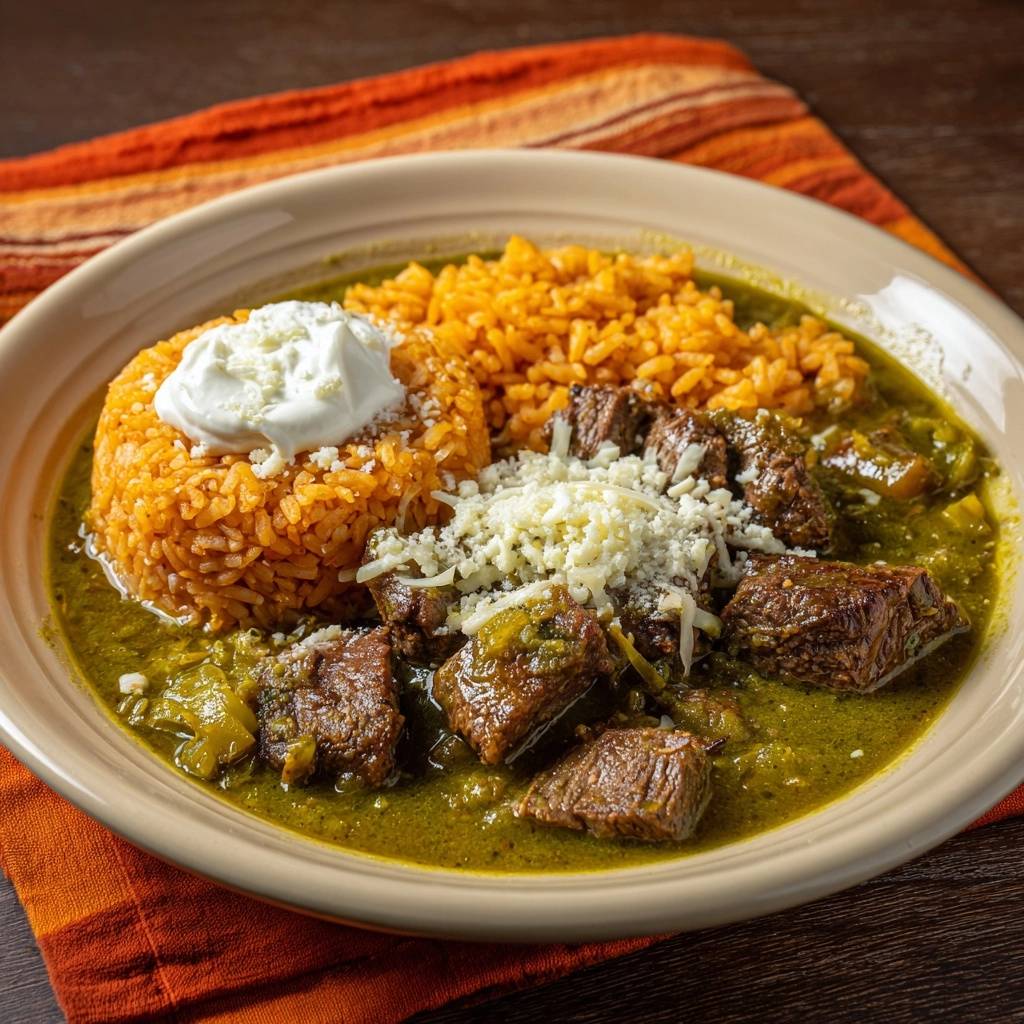
Chuck Roast: Ideal Cut Choice
Chuck roast shines in stews thanks to its marbling and connective tissue. That fat melts during simmering, basting the meat. Sirloin lacks collagen and dries out; brisket needs longer cooks.
Grab grass-fed if you can. It offers better flavor from varied diet. Grain-fed works fine too, just trim excess fat first. Always cut against the grain for tenderness.
Acidity’s Role in Meat Breakdown
Tomatillos pack citric acid with a pH around 4, mimicking slow cooking’s collagen melt. After 90 minutes, meat hits peak tenderness without mush. Vinegar overloads bitterness, so stick to fresh verde.
In addition, this acidity pairs with cumin for balanced earthiness. No need for extra tenderizers. Just simmer low, and science does the rest.
Essential Ingredients for Beef Chile Verde
Start with 2 pounds beef chuck, cubed at 1.5 inches for even cooking. Fresh tomatillos (1 pound, husked and quartered) give tangy brightness; canned ones taste flat. Roasted poblanos (4) add smokiness that bell peppers can’t match.
Aromatics like 1 chopped onion, 4 minced garlic cloves, and 3 jalapeños build depth. Fresh cilantro (1 cup) brightens it all. Use 2 cups beef broth for savory base; cumin (2 teaspoons) ties flavors together. Salt and pepper season generously.
For rice, 2 cups long-grain white absorbs perfectly without gumminess. Tomato sauce (8 oz can) colors and flavors; 3 cups chicken broth keeps it light. Top with sour cream and queso fresco for creaminess. Tomatillos boost vitamin C too.
Tomatillos vs. Tomatoes Base
Tomatillos deliver sharp tang over tomatoes’ sweetness. Husk them by peeling back and rinsing sticky residue. Quarter for easy blending; they soften fast in the pot.
Poblano Roasting Technique
Roast poblanos over gas flame or broiler until charred black. Steam in a bag 10 minutes for easy peeling. Bell peppers lack that smoky essence, so don’t swap.
Key Tools for Beef Chile Verde Success
A Dutch oven handles searing and simmering with even heat. Its thick walls retain warmth without hot spots. Blenders smooth the sauce; cast iron outperforms nonstick for crust.
Therefore, use a heavy lid to trap moisture. Rice cookers work for hands-off grains, but stovetop toasting builds better nutty flavor. Clean tools right after to avoid stuck bits.
Dutch Oven Heat Dynamics
Thick enameled Dutch ovens stabilize simmer at 180-200°F. Lids seal in steam for tenderizing. Bare cast iron adds iron flavor but needs seasoning care.
Searing Technique Locks Beef Juices
Pat beef dry first; moisture steams instead of browns. Heat 2 tablespoons oil until shimmering, then sear cubes in batches 3-4 minutes per side. You’ll see a deep crust form, smelling rich and caramelized.
Don’t crowd the pot, or it boils. This Maillard crust coagulates proteins, trapping juices inside. Transfer to a plate; those drippings boost sauce later.
Common mistake: low heat. Crank it high for that satisfying sizzle and color shift from pink to mahogany.
Browned Bits Flavor Boost
Fond from searing dissolves into sauce, layering umami. Scrape it up with broth; it deglazes naturally. Skip this, and flavor falls flat.
Building the Verde Sauce Base
In beef fat, sauté onion, garlic, and 2 jalapeños 3 minutes until fragrant and soft. Add tomatillos, poblanos, cilantro, and broth. Simmer while scraping fond; aromas turn vibrant green.
Blend hot sauce in batches with lid vented to avoid explosions. Return smooth verde to pot. It should coat a spoon thickly, not watery.
Pro tip: Taste here. Adjust jalapeños for heat before adding beef.
Blending for Silky Consistency
Immersion blenders keep it in-pot; stand models puree finer. Pulse to avoid chunks. Test by rubbing sauce between fingers; it should feel velvety.
Simmering Beef to Shreddable Tenderness
Return beef and juices to sauce, submerging fully. Cover and simmer low 1.5-2 hours, stirring every 30 minutes. Sauce bubbles gently, thickening as collagen melts.
Acids work magic here, turning firm cubes buttery. Fork-test: it shreds easy when done. Season salt last; flavors concentrate.
Monitoring Doneness Precisely
Aim for 195-205°F internal; fork slides in like butter. Overcook past 3 hours, and it shreds too much. Visual cue: meat darkens and sauce clings.
Perfect Mexican Rice Foundations
Heat 1 tablespoon oil, toast 2 cups rice 2 minutes to golden. It smells nutty now, preventing mush. Add diced onion and garlic; sauté 1 minute fragrant.
Stir in tomato sauce, 3 cups broth, and salt. Boil, then low simmer covered 20 minutes undisturbed. Fluff; grains separate perfectly. Long-grain absorbs evenly without sticking.
Pro tip: 3:2 broth ratio is key. Too much liquid gums it up.
Toasting Rice Prevents Gumming
Toasting coats grains in oil, upgrading absorption. Rinse rice first for less starch. Golden edges signal readiness; skip and risk paste.
Assembling Beef Chile Verde with Rice
Spoon tender beef verde over rice beds. Dollop sour cream melts into sauce, cooling heat. Crumble queso fresco for salty crunch, slice jalapeño for bite.
Store leftovers fridge 4 days airtight. Reheat gently with splash broth to revive moisture. Freezes well too, up to 3 months.
Toppings Balance Heat and Creaminess
Sour cream cuts acidity; queso fresco adds mild salt over cotija’s sharpness. Sprinkle extra cilantro fresh. Perfect harmony.
Science of Tender Beef Chile Verde
Searing coagulates surface proteins, sealing moisture. Verde’s pH 4 hydrolyzes collagen to gelatin over simmer. Cumin dissolves in fat for even distribution.
Keep temp 180-200°F; higher toughens meat. Pressure cookers speed it but dilute flavors. This stovetop method nails balance.
Collagen to Gelatin Transformation
Collagen fibers unwind at low pH and heat, forming silky gelatin. Chuck’s abundance makes it ideal over lean loin. Hits peak at 90-120 minutes.
Make-Ahead and Freezing Beef Chile Verde
Stew tastes better next day as flavors meld. Fridge airtight 4-5 days. Freeze beef separate from rice 3 months in portions.
Thaw overnight, reheat simmer with broth. Undercook rice slightly before freezing to avoid mush. Portion for quick weeknights.
Portioning for Weeknight Wins
Flat-freeze quart bags for stackable storage. Label dates and contents. Thaws fast in fridge.
Avoiding Beef Chile Verde Pitfalls
Tough beef? You skipped sear or simmered too short. Bland sauce means under-roasted poblanos; extend char time. Mushy rice from stirring or excess liquid.
Watery verde? Blend less broth or reduce longer. Fixes build confidence next batch.
Fixing Overcooked or Bland Batches
Overcooked? Add fresh beef chunks. Bland? Stir in lime and cilantro. Extend simmer 30 minutes to revive.
Flavor Twists on Beef Chile Verde
Swap pork shoulder for traditional vibe. Anaheim peppers mild it down; hominy adds chew. Vegan? Mushrooms mimic beef texture.
Brown rice needs 45-minute simmer. Scale spice with seeds removed for mild.
Heat Level Customization Guide
Remove jalapeño seeds for medium; add habanero for fire. Start with 2, taste sauce, adjust.
Pairing Sides with Beef Chile Verde
Warm tortillas scoop it up. Lime wedges brighten tang. Avocado slices add silkiness.
Horchata cools spice perfectly. Try charred corn salad for sweet crunch. Builds a feast bowl.
Complementary Mexican Sides
Elote off-cob brings smoky mayo. Pickled onions cut richness sharp.
Beef Chile Verde Origins and Evolution
Chile verde hails from New Mexico and Sonora, verde sauce from pre-Columbian tomatillos. Traditionally pork, beef adapts for hearty stews.
Modern shortcuts like this sear keep authenticity. Serve family-style with rice.
Traditional vs. Modern Twists
Pueblo roots influence earthy spices. U.S. Southwest fuses bolder beef versions.
Troubleshooting Beef Chile Verde with Rice
Why is my beef still tough?
Toughness comes from skipping the sear or under-simmering. The high-heat crust locks juices, and tomatillo acids need 1.5-2 hours at low bubble to break collagen. Next time, pat dry well, sear batches golden, and fork-test at 90 minutes. It’ll shred effortlessly.
How do I store leftovers?
Keep beef verde and rice separate in airtight containers fridge up to 4 days. Beef freezes 3 months; rice up to 1 month if undercooked slightly first. Reheat beef with broth splash on stovetop low; microwave rice with damp towel to steam. Avoid refreezing thawed meat.
Can I substitute ingredients?
No chuck? Pork shoulder works same way. Canned tomatillos okay in pinch, drain well. Gluten-free? Rice stays naturally so; swap broth for veggie. Fewer poblanos? Anaheim milder, roast same. Keeps authentic tang.
Why is my rice soggy?
Soggy rice skips toasting or wrong ratio. Toast golden in oil first absorbs better; stick to 3:2 broth. Don’t stir or peek during simmer; steam builds inside. Rinse rice pre-toast cuts starch too.
How do I scale for smaller batches?
Halve everything; cube size stays 1.5 inches for tenderness. Sear time same, simmer 1-1.5 hours. Rice broth scales direct. Perfect for 2-3 servings without waste.
Can I make this in Instant Pot?
Yes, sear sauté mode 8 minutes batches. Blend sauce, pressure high 45 minutes natural release 15. Rice separate pot-in-pot. Quick but stovetop builds deeper fond flavor. Adjust broth down 1/2 cup.
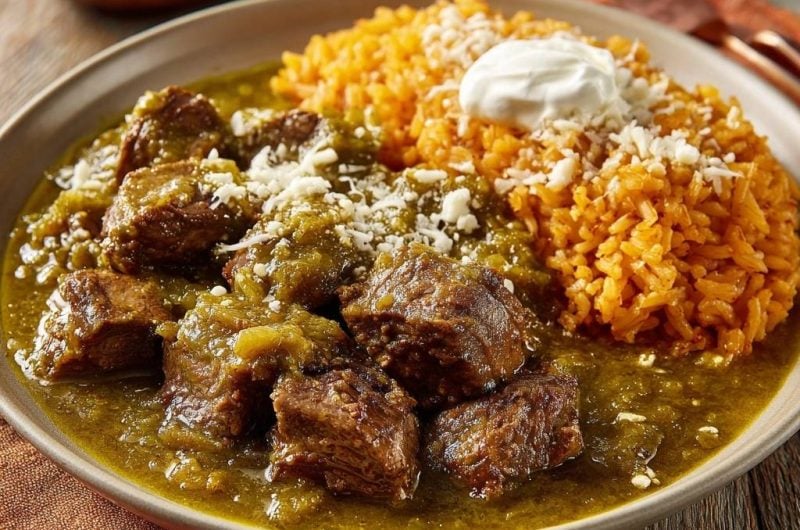
Beef Chile Verde with Mexican Rice
Course: Main CourseCuisine: MexicanDifficulty: easy6
servings30
minutes2
hours120
MinutesMexican
Ingredients
For the Beef Chile Verde:
2 pounds beef chuck roast, cut into 1.5-inch cubes
1 pound fresh tomatillos, husked and quartered
4 poblano peppers, roasted and peeled
3 jalapeños, stemmed (2 for sauce, 1 sliced for garnish)
1 large onion, chopped
4 garlic cloves, minced
1 cup cilantro leaves
2 cups beef broth
2 teaspoons ground cumin
Salt and pepper to taste
2 tablespoons vegetable oil
For the Mexican Rice:
2 cups long-grain white rice
1 can (8 oz) tomato sauce
1 small onion, diced
2 garlic cloves, minced
3 cups chicken broth
1 tablespoon vegetable oil
Salt to taste
Toppings:
1/2 cup sour cream
1/2 cup crumbled queso fresco
Directions
- Pat beef cubes dry with paper towels and season generously with salt, pepper, and cumin. Heat 2 tablespoons oil in a large Dutch oven over medium-high heat until shimmering. Sear beef in batches (do not crowd) for 3-4 minutes per side until deep brown crust forms. This crucial high-heat sear seals juices and jump-starts tenderness, preventing toughness. Transfer seared beef to a plate.
- In the same pot, add onion, garlic, and 2 jalapeños; sauté 3 minutes until softened. Add tomatillos, roasted poblanos, cilantro, and broth. Bring to simmer, scraping up browned bits. Blend sauce smooth in batches if needed, then return to pot.
- Return beef and juices to pot, stirring to coat. Cover and simmer on low heat 1.5 to 2 hours, stirring occasionally, until beef shreds easily with a fork. The verde sauce’s natural acids break down collagen for guaranteed tenderness. Taste and adjust salt.
- For rice: Heat 1 tablespoon oil in a saucepan over medium heat. Toast rice 2 minutes until golden. Add onion and garlic; cook 1 minute. Stir in tomato sauce, broth, and salt. Bring to boil, then reduce to low, cover, and simmer 20 minutes undisturbed. Fluff with fork.
- Serve beef verde over rice. Top with sour cream dollop, queso fresco crumbles, and jalapeño slices. Enjoy tender beef bliss!
Notes
- Sear the beef in batches without crowding to develop a deep brown crust, which seals in juices and ensures tenderness. The verde sauce’s natural acidity tenderizes the meat perfectly.


